Most of us have thrown away hundreds of things without a second thought. Hotel soap goes into the bin. A used keycard gets left on the dresser. The cereal box hits the recycling the moment it’s empty. Road signs get replaced. Fast-food packaging disappears. Old gadgets sit in a drawer until someone finally decides they’ve taken up enough space.
But some people keep them. Not one or two as souvenirs. Hundreds. Sometimes thousands.
There are collectors who fill garages with bricks, shelves with hotel keycards, boxes with vintage packaging, and entire rooms with McDonald’s memorabilia. From the outside it can look baffling. Why would anyone spend years hunting for something most of us wouldn’t even bend down to pick up?
There’s more to it than simple eccentricity. People rarely collect an object only because of what it is. They collect what it represents — a childhood, a holiday, a particular place, a vanished product, a piece of technology, or simply the quiet satisfaction of finding something everyone else overlooked. Once you start looking at unusual collections this way, the strange world of collecting starts to make more sense.
What Makes Something Collectible?
There’s a common assumption that an object becomes collectible because it’s rare or expensive. That happens, of course. But it’s only part of the story.
A collectible can matter because it’s hard to find. It can also matter because it carries a memory, belongs to a series, marks a particular period, or has a story attached to it that only one person really understands.
This is why collecting can turn ordinary objects into something personal. A hotel keycard might be worth almost nothing financially, yet the person who kept it may remember exactly which city it came from and why they were there. An old Happy Meal toy may be worthless as a toy, but for someone who grew up with it, that piece of plastic can bring back an entire stretch of childhood.
There’s also something appealing about choosing an object other people ignore. Everyone understands rare coins or expensive watches. Collecting hotel soaps or bricks is different. The same curiosity can also explain why some strange products manage to find buyers even when most people would never consider owning them. The collector has to explain the interest, learn the subject, and often invent their own rules for what belongs in the collection.
Over time, an ordinary object can also turn into a quiet record of everyday life. Some objects even become part of our lives so gradually that we barely notice it happening. Packaging shows how companies once sold things. Road signs reveal how streets and highways changed. Old technology tells us how people used to communicate and listen to music.
Strange Things People Actually Collect
The best way to understand unusual collecting is to look at the people who actually do it. Some of these collections sound almost comical when reduced to a single sentence. The stories behind them are what make them interesting.
Why Do People Collect Hotel Soaps?
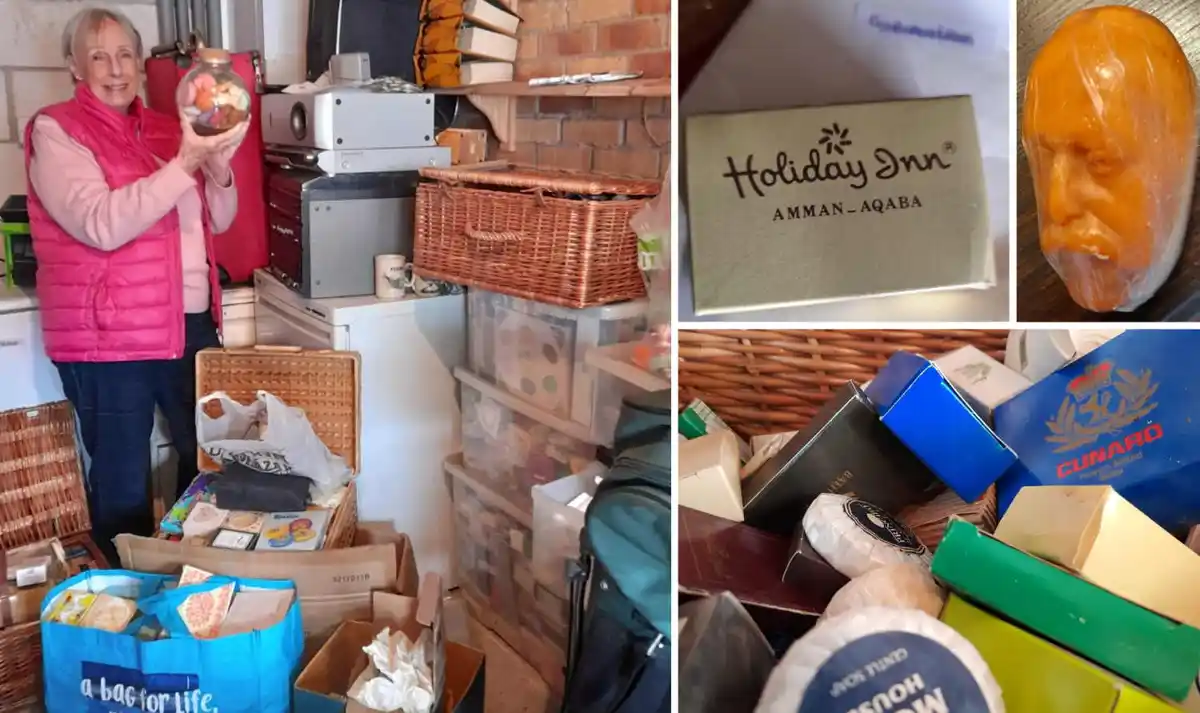
Stephanie Weaver spent roughly fifty years building a 2,000-bar collection of hotel soaps, a retired bookkeeper from Derby in England, spent roughly fifty years collecting hotel soaps. She began in the 1970s during family holidays. Over the decades the collection grew to around 2,000 bars, many of them taken from hotel bathrooms, with friends later contributing pieces from their own travels. By 2023 she had stored them in plastic tubs, drawers and picnic baskets in her garage. One of her old notes from 1987 already listed 272 bars.
The collection included everyday brands, soaps from different countries, a bar from the Holiday Inn in Amman, a piece dating to around 1900, and a crown-shaped soap linked to the 1953 coronation. When she decided to part with the collection through Hansons Auctioneers, she said she mainly wanted to find it a new home rather than focus on the money.
Weaver wasn’t collecting soap the way someone collects rare perfume bottles. She was collecting places and the memory of stays. Objects have a strange ability to bring memories back, especially when they are connected to a particular place, smell or moment. Each bar became a small reminder of a trip that would otherwise fade. That distinction explains a lot about why people collect things most others discard. The object is only the visible part. Behind it is the desire to hold on to something that would otherwise disappear.
Hotel Keycards: Turning Travel Into a Physical Archive
Hotel keycards have an even shorter useful life than hotel soap. Once you check out, the card is usually useless. Most people leave it behind or throw it away within days.
Morten Soerensen decided to keep his. Guinness World Records verified his collection at 1,136 hotel keycards in 2023 after he had spent roughly 25 to 30 years building it. Morten says the cards are valuable because they preserve memories of trips and places he has visited. The cards came from his own travels and from trips made by friends and family. The collection includes older magnetic-strip cards and newer contactless ones, so it also shows how hotel technology and branding have changed over time.
Some cards matter to him more than others because of the places they are connected to. The rarest item isn’t always the favorite. Collectors often attach value to objects because of personal associations that would mean nothing to anyone else. A hotel keycard looks completely disposable until you know the story behind it.
McDonald’s Collectibles and Fast-Food History
Fast-food memorabilia can seem excessive until you look at it as a record of popular culture. McDonald’s has produced decades of toys, packaging, uniforms, promotional items and other branded objects, many of them designed to be temporary.
Lee Choon Chiek in Malaysia has spent more than four decades building a 70,000-piece McDonald’s collection. His private Top Fast-Food Toy Collections Museum in Alor Setar holds tens of thousands of items, including Happy Meal toys, packaging, uniforms and condiment packets from different countries. His collecting began in the late 1970s and eventually grew into a large archive of fast-food memorabilia.
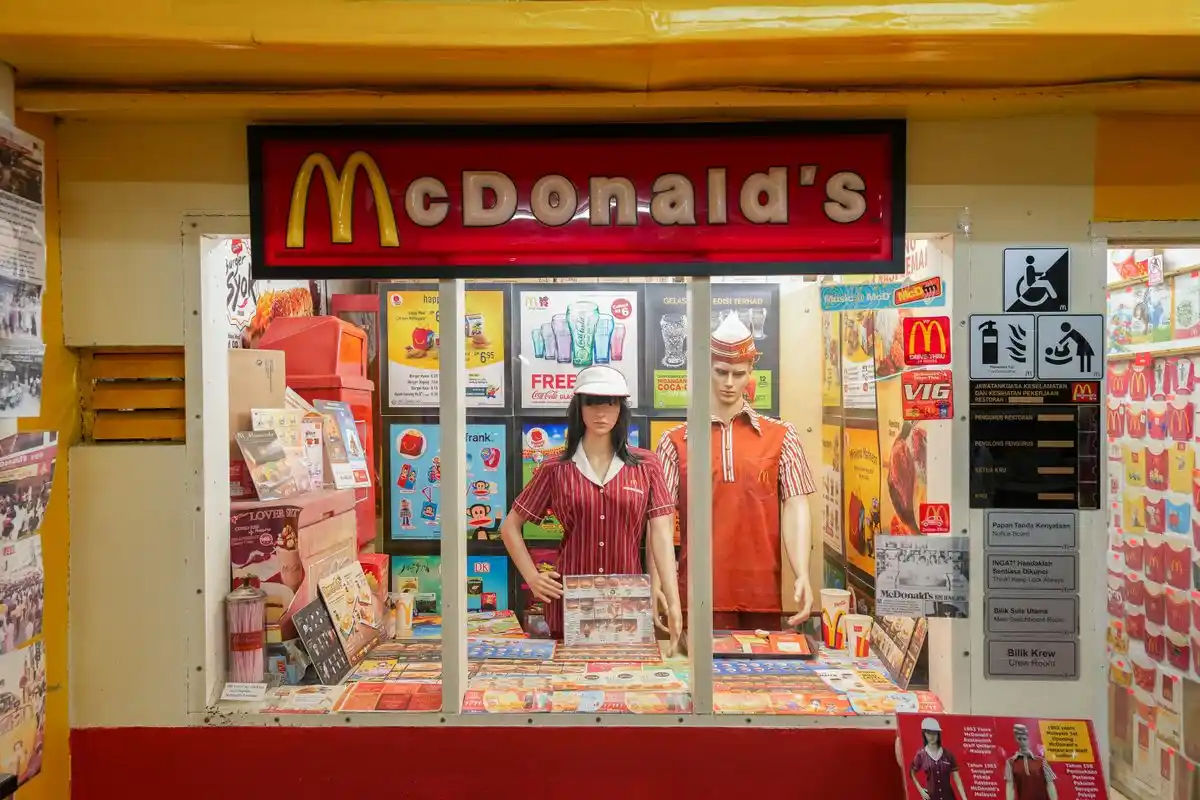
A single Happy Meal toy doesn’t tell you much. A collection covering several decades tells a different story. You can see characters come and go, advertising styles change, packaging evolve, and different promotions appear in different markets. Some designs were specific to certain countries, which means the collection also shows how a global brand adapted itself to different places. For a child the object might simply have been a favorite toy. Years later it can become a reminder of childhood. That’s how something designed to be thrown away can eventually become a piece of cultural history.
When Old Packaging Becomes History
Some of the most interesting collections are built around objects that were never meant to last. Packaging sits between the product and the culture around it. It can show what a company wanted customers to notice, which colors and images were considered attractive, and how attitudes changed over time. Once a product disappears, the packaging can become one of the few physical records that remain.
The Smithsonian’s National Museum of American History holds a strong example in the Virgil Johnson Collection of Cigarette Packages. The collection contains roughly 6,000 packages from the United States and other countries, dating from around 1890 to 1997. Johnson began collecting as a teenager and continued for decades. What once looked like disposable commercial packaging eventually became material that researchers could use to study changes in branding, design and consumer culture.
That’s one of the strange things about collecting. The collector doesn’t always know what the collection will become. An object can start as a personal curiosity and acquire historical weight later.
Why Would Anyone Collect Bricks?
If hotel soaps sound unusual, bricks take the idea further. They’re construction materials. Most of us see a brick as part of a wall and never think about it again.
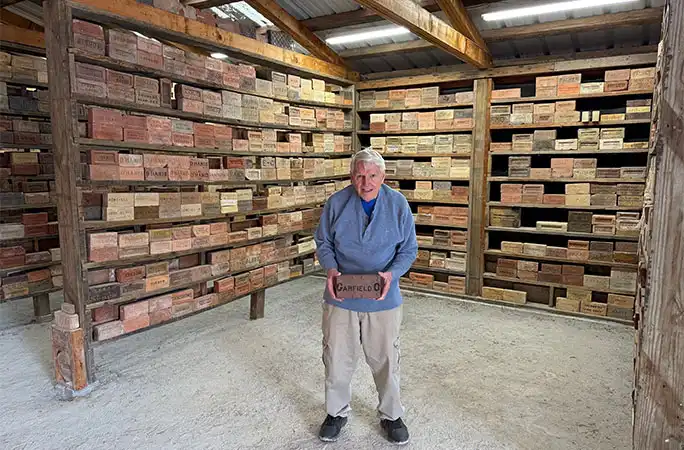
Clem Reinkemeyer does think about them. Guinness World Records verified his collection at 8,882 different bricks in 2023. He had been collecting for more than four decades. The bricks were stored in a barn in Tulsa, Oklahoma, and organized by state. Many carry markings that identify where and when they were produced. A single brick can connect to a factory, a local industry, or a building that no longer exists. Clem Reinkemeyer’s collection of 8,882 bricks.
Most people walk past a wall and only notice the color or the texture. He notices the factory mark and the year. Once you know what you’re looking at, an object that seemed completely ordinary can suddenly contain details worth investigating.
Road Signs and Places That No Longer Look the Same
Road signs belong to places that keep changing. Highways get redesigned, streets get renamed, old signs get replaced, and infrastructure disappears without much ceremony.
Steve Salcedo of Roanoke, Indiana, has collected more than 400 road and traffic signs. His interest started when he was a child — his mother used to read the interstate signs to him during car journeys. As an adult he began actively collecting them and built custom shelving for the growing collection. He has said he enjoys the search itself and has never paid more than $100 for a sign.
Collecting isn’t always about owning something expensive. For some people the pleasure comes from finding an unusual example before anyone else notices it (Steve Salcedo’s collection of more than 400 road signs). An old road sign can also preserve a version of a place that has disappeared. A road may have been widened or a junction redesigned, but the old sign remains as a physical reminder of what came before. The same is true of old house numbers, parking signs and other pieces of public infrastructure. They aren’t glamorous. They quietly document how ordinary places used to work.
Some Collectors Want the Mistakes
Not every collector is searching for the perfect example. Some are looking for the mistakes.
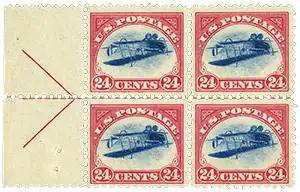
Error collecting is well known in stamps and trading cards, where printing mistakes, miscuts, missing colors and inverted designs can make an item unusually scarce. The famous Inverted Jenny stamp is one of the best-known examples: the airplane was printed upside down on a small number of 1918 U.S. stamps, turning a production error into a legendary collectible.
Error collecting is well known in stamps and trading cards, where printing mistakes, miscuts, missing colors and inverted designs can make an item unusually scarce. The Inverted Jenny is one of the best-known examples: the airplane was printed upside down on a sheet of 1918 U.S. airmail stamps, turning a production error into a legendary collectible. The basic attraction is easy to understand. A normal product can be made thousands or millions of times, while a mistake may appear only in a small number of pieces before quality control catches it. The flaw becomes the thing that separates one example from everything else. Collectors of modern products look for similar accidents — a packaging error, an incorrectly printed label, a manufacturing anomaly. The factory wanted the mistake removed. The collector wants to find it. What was once considered defective can become the most interesting version of the product.
Why Do People Collect Weird Things?
Once you look at enough unusual collections, it becomes hard to explain them with a single reason. Nostalgia is important, but it isn’t everything. Some collectors are driven by the search, others by history, others by the desire to complete a series. Many are motivated by several of these things at the same time.
The most obvious motivation is memory. People often keep objects connected to childhood, travel, family or important periods of their lives. The same curiosity that makes us notice strange objects in the first place can also make us want to keep them. A cereal box can remind someone of weekend breakfasts. A hotel soap can bring back a holiday from thirty years ago. The physical object gives the memory somewhere to live. That may explain why collectors can become emotionally attached to things that have almost no financial value.
The hunt is another powerful part of collecting. Searching flea markets, auctions, old shops, online marketplaces and unexpected corners of the internet creates a sense of discovery that simply buying something new doesn’t provide. A collector may already have hundreds of objects but still get excited about the next one because they don’t know what it will look like or where they will find it.
There’s also the satisfaction of building expertise. The longer someone collects a particular category, the more they notice. A beginner sees ten similar objects. An experienced collector immediately sees that one was made in a different year or country. The hobby gives ordinary objects a new level of detail, and that knowledge becomes part of the enjoyment.
Then there is identity. Saying “I like old things” doesn’t tell anyone very much. Saying “I collect hotel keycards from hotels that no longer exist” immediately creates a story. A collection can become a visible expression of someone’s interests and personality, especially when the subject is unusual enough that very few people share it.
Why Do Collectors Want to Complete a Set?
One object can be interesting on its own. A group creates a pattern.
Once a collector discovers that there are different versions of something, the missing versions suddenly become much harder to ignore. A collection with nine of ten variations can feel strangely incomplete even if the tenth item would have meant nothing before the collection existed. This is especially obvious with toys, trading cards, packaging and other objects that were deliberately released in series. Collectors can become interested in different colors, years, regional editions, manufacturers or limited releases. The result is a psychological shift. The collector isn’t simply looking for another object anymore. They’re looking for the missing piece. That can keep a collection growing for years.
When Does Collecting Become Too Much?
Having a huge collection doesn’t automatically mean someone has a problem. Serious collectors can be highly organized, careful with money and deeply knowledgeable about what they own. Some catalog everything, display their collections, trade with other collectors, or use their knowledge to preserve objects that might otherwise disappear.
The more useful question is whether the hobby remains under the person’s control. If collecting starts creating serious financial problems, damaging relationships, taking over essential living space, or becoming impossible to stop despite clear consequences, then the issue is no longer simply the size of the collection. For most collectors a strange hobby is simply a strange hobby. The fact that someone owns thousands of bricks doesn’t tell us much by itself. What matters is why they collected them, how the collection fits into their life, and what meaning they have attached to those objects. The line between passion and excess isn’t really measured in numbers.
How the Internet Changed Strange Collecting
Unusual collectors once had a problem that seems almost unimaginable today: finding other people who cared about the same thing.
Before the internet, a collector might depend on local flea markets, specialist magazines, collector clubs, antique shops or chance encounters. If you collected something extremely specific, there might be only a handful of people in your area who understood what you were looking for.
Online marketplaces changed that. A discarded object could now be photographed, listed and discovered by someone thousands of miles away who had been searching for exactly that item. The internet didn’t create the desire to collect strange objects, but it made niche collecting much easier because supply and demand no longer had to exist in the same place.
Online communities changed the social side as well. Collectors can compare finds, identify unusual variations, exchange duplicates and show new additions to people who actually understand why they matter. A hobby that once seemed incredibly eccentric can suddenly turn out to have a surprisingly large community behind it. Social media has taken this further by turning collections into content. People document flea-market finds, show shelves and storage rooms, explain rare objects and film the process of hunting for the next addition. The collection isn’t just something they own anymore. It can become a story that other people follow.
When Does Trash Become a Collectible?
There is no exact moment when an object crosses the line from trash to collectible, but the process often follows a familiar pattern.
An object starts out as something disposable. Production eventually stops or the product changes. Most people throw their examples away, leaving fewer and fewer behind. Years pass. Nostalgia develops. Eventually someone starts looking for the old version on purpose. That’s when the object can become collectible.
Old packaging is a good example. When a product is still being sold everywhere, nobody needs to preserve the box because millions more are available. Once the product disappears, surviving examples become evidence of a particular time. The same thing happens with toys, technology, restaurant menus, advertising materials, hotel items and public signage. What looks completely ordinary while it is being used can become surprisingly interesting once it becomes difficult to find.
This is one reason collectors can be useful even when their hobbies look strange from the outside. They sometimes preserve pieces of everyday culture long before anyone else realizes those pieces are disappearing.
The Next Generation of Weird Collections
If collectors in the future look back at our era, they may find some of today’s most disposable digital objects surprisingly fascinating. Someone might collect screenshots of early websites, discontinued apps, old social-media interfaces, obsolete smartphones, online-game items, or digital products that disappeared when a company shut down. Early AI-generated images may eventually become historical artifacts too, especially if the platforms that produced them no longer exist.
That may sound strange now. Collecting hotel keycards would have sounded strange several decades ago as well. The important thing is not whether an object seems valuable today. It is whether the object captures something about a particular moment that may eventually disappear. The first versions of websites, apps, digital interfaces and AI tools may tell future researchers as much about our everyday lives as old packaging tells researchers about consumer culture today. The strangest collections of the future may consist of things we currently don’t bother saving.
The Real Reason People Collect Things Nobody Else Wants
After looking at thousands of bricks, hotel soaps, keycards, road signs, fast-food toys, cigarette packages and manufacturing errors, the question starts to look slightly different. Maybe people aren’t really collecting weird objects so much as collecting evidence of things that mattered to them. A hotel soap can represent a holiday. A keycard can represent a city or a childhood trip. A Happy Meal toy can bring back a particular decade. A road sign can preserve a version of a town that no longer exists. A brick can connect a collector to an old factory or building. Even a manufacturing mistake can become interesting because it records a moment when something went wrong.
We may never want 2,000 hotel soaps ourselves. But we understand wanting to hold on to a good trip. We may never collect bricks, but we understand the satisfaction of noticing something everyone else walks past. We may never collect road signs, but we understand the feeling of finding something that reminds us of a place that has changed.
That’s the strange logic of collecting. Almost anything can become meaningful once someone decides it’s worth keeping. The objects we throw away today may look completely insignificant. That doesn’t mean they will always stay that way. Somewhere right now, someone may already be saving the things the rest of us don’t think twice about. And fifty years from now, those forgotten objects might be the exact pieces of everyday life that everyone else wishes they had kept.