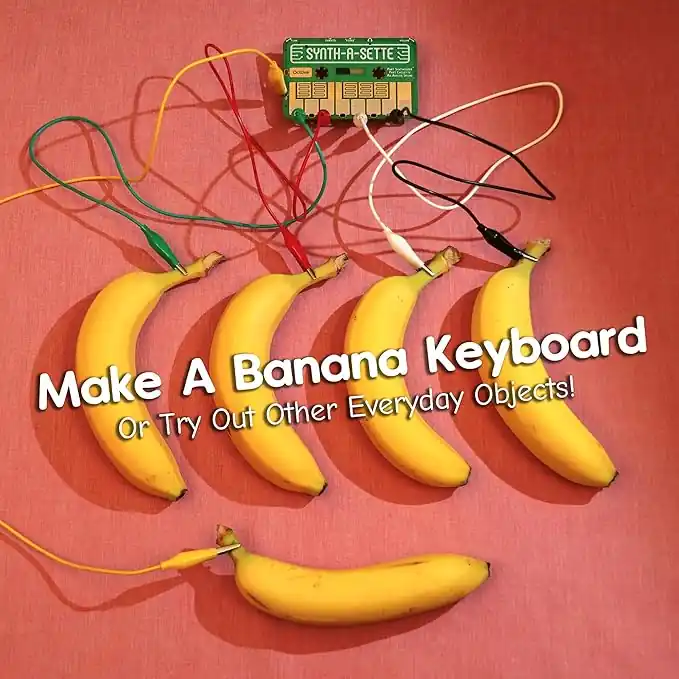

From the Pet Rock to fish slippers, the world’s weirdest products all have one thing in common—they’re selling far more than their practical function.
In 1975, an unemployed advertising executive named Gary Dahl was having a drink with friends when the conversation drifted toward pets. One person complained about the cost of feeding a dog. Another was tired of cleaning up after a cat. Like many casual conversations, it quickly became a competition to see who had the most frustrating pet.
Somewhere in the middle of the discussion, Dahl made an offhand joke.
“The perfect pet,” he said, “would be a rock.”
Unlike dogs, a rock never needed feeding. It never barked at strangers, scratched the furniture, or woke anyone in the middle of the night. It didn’t need training, veterinary visits, or expensive toys. It simply sat there, quietly doing exactly what a rock has always done.
Everyone laughed. Most jokes disappear as quickly as they arrive. Dahl’s didn’t.
Instead of forgetting the idea the next morning, he wondered whether people might actually enjoy owning something so completely ridiculous. Not because they believed it had value, but because everyone immediately understood the joke. That simple thought became one of the strangest business ideas of the twentieth century.
Within a few months, ordinary stones were being packed into small cardboard carrying boxes complete with ventilation holes, bedding, and a humorous instruction manual. The product was called the Pet Rock, and during the 1975 holiday season more than a million were sold.
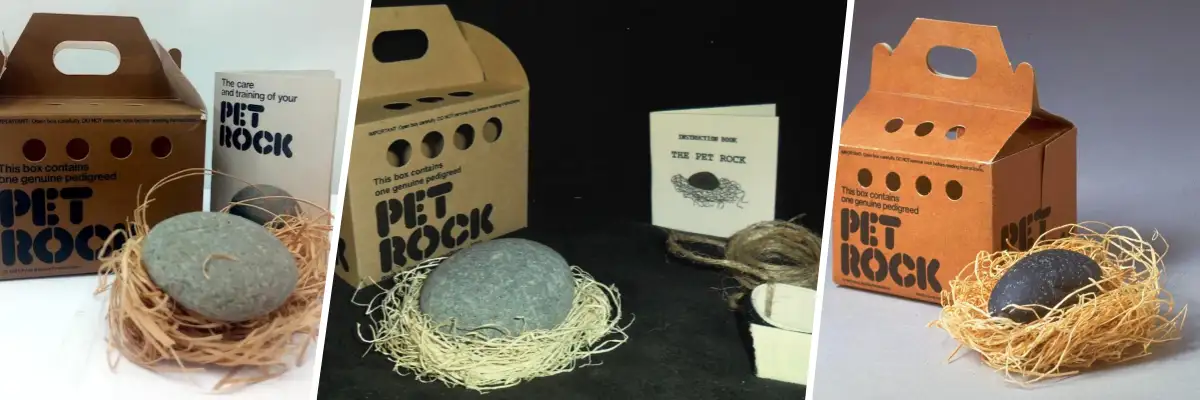
Looking back, it’s almost impossible to explain using traditional ideas about consumer behavior. The Pet Rock wasn’t innovative. It solved no real problem. The “pet” itself could have been picked up for free almost anywhere. Yet millions of people happily paid for one.
The obvious question is why.
The Joke Never Really Ended
It’s tempting to think of the Pet Rock as a uniquely 1970s phenomenon, but the idea behind it never disappeared. Open Amazon or Etsy today and you’ll find hundreds of products built on exactly the same principle. They’re not designed to make life dramatically easier. Instead, they exist to surprise people, start conversations, or simply make someone laugh.
A banana-shaped telephone won’t improve the quality of your phone calls. Fish-shaped slippers aren’t objectively better than ordinary slippers. A pickle that yodels when you press a button has absolutely no practical purpose. And yet people continue buying products like these every day. Not because they’re useful. Because they’re memorable.
None of these products promises to change your life. They all succeed for the same reason the Pet Rock did—they’re unexpected, instantly understandable, and almost guaranteed to make someone smile. That’s exactly what makes them such popular gifts and conversation starters. The success of products like these seems to contradict what we’re often told about shopping.
Traditional economics assumes that consumers make rational decisions. If two products perform the same job, the cheaper or more efficient one should usually win. That logic works well for refrigerators, vacuum cleaners, and washing machines, where practical performance matters far more than personality. Novelty products follow a completely different set of rules. People rarely compare a fish slipper with an ordinary slipper and conclude that it’s objectively better footwear. That’s not the decision they’re making in the first place.
Instead, they’re asking a very different question.
“Will this make someone laugh?”
“Would this be a fun gift?”
“Have I ever seen anything like this before?”
Those questions have nothing to do with practicality, but they have everything to do with how humans experience products.

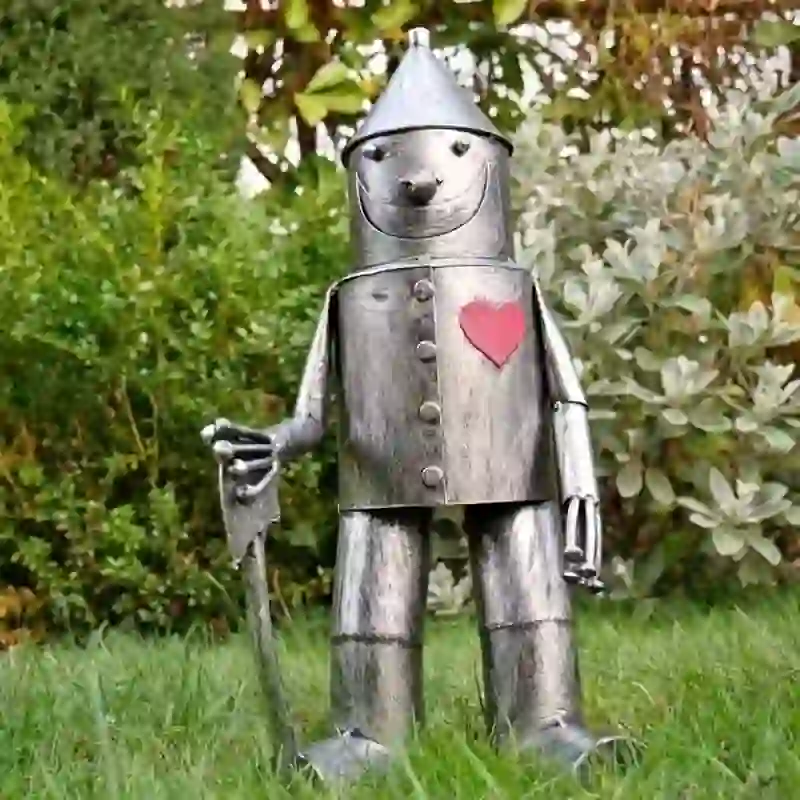
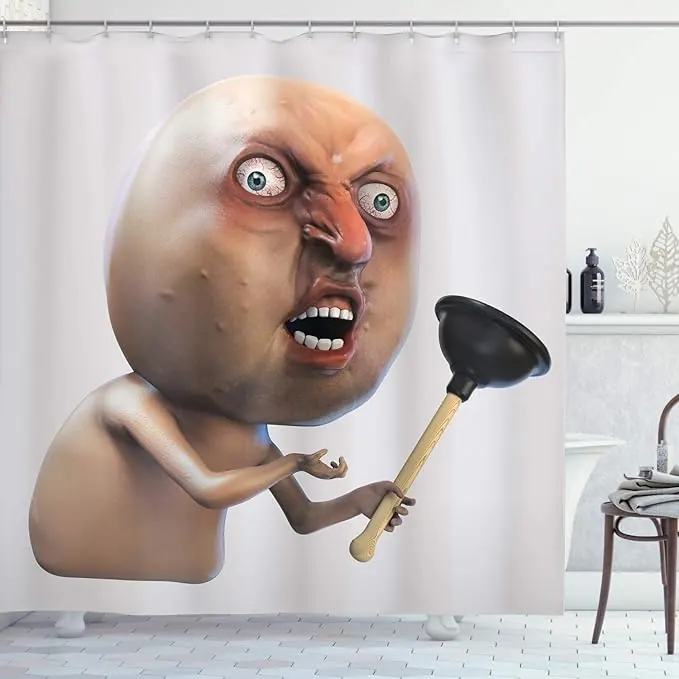

That’s why novelty items often survive for decades while technically superior products quietly disappear. They’re competing for attention rather than efficiency, for emotion rather than optimization. Once you look at them that way, the Pet Rock begins to feel much less like an accident and much more like the first modern example of a business built entirely around curiosity.
And curiosity, as it turns out, is something people never seem to run out of.
People Don’t Buy Products, They Buy Experiences
In fact, you probably experience the same thing every morning without even thinking about it.
All it takes is a simple coffee mug.
From a purely functional perspective, a mug has a very simple job. It holds a beverage, keeps it from spilling onto your desk, and ideally survives repeated encounters with the dishwasher. That’s all most people truly need. Yet walk through any gift shop or spend a few minutes browsing online, and you’ll quickly discover that an astonishing number of mugs seem determined to be anything except ordinary.
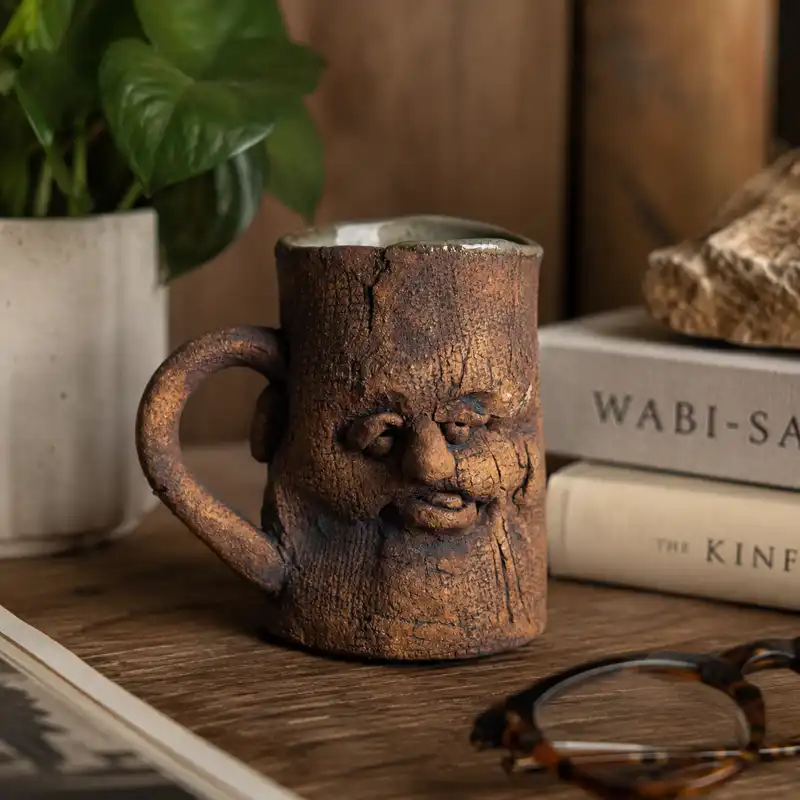
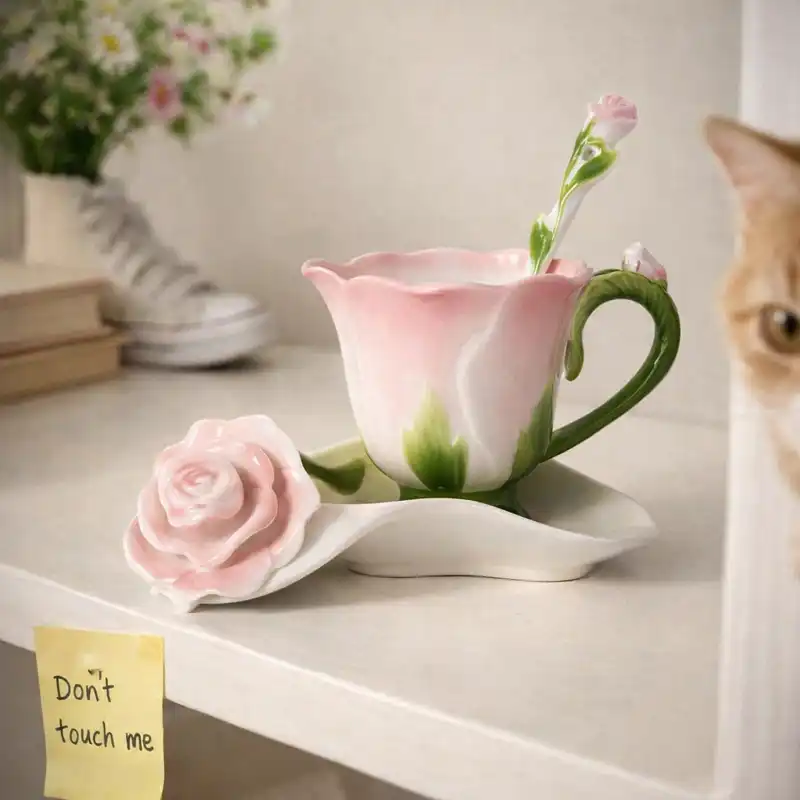

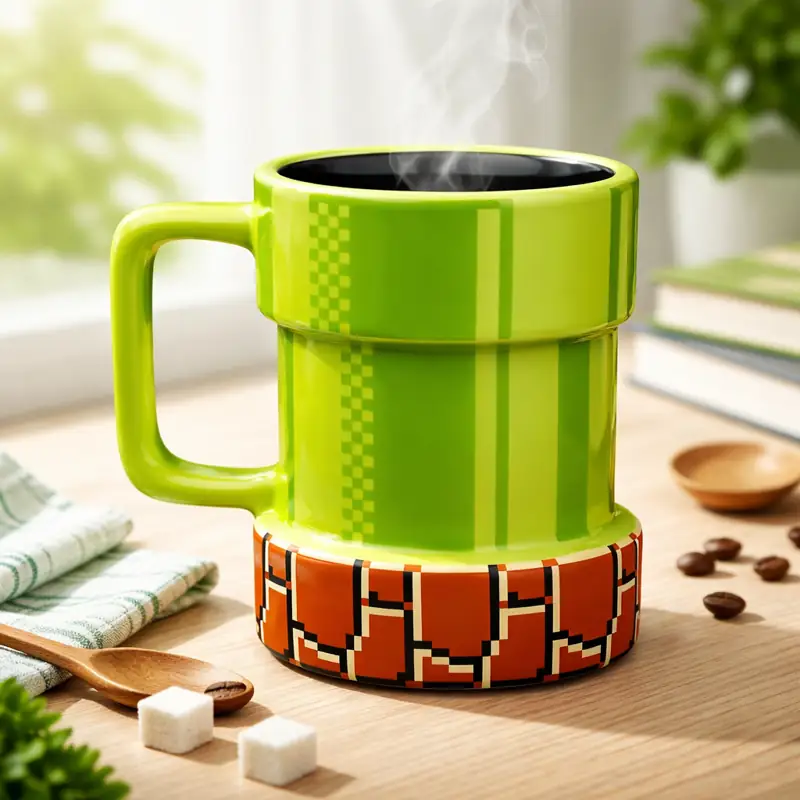

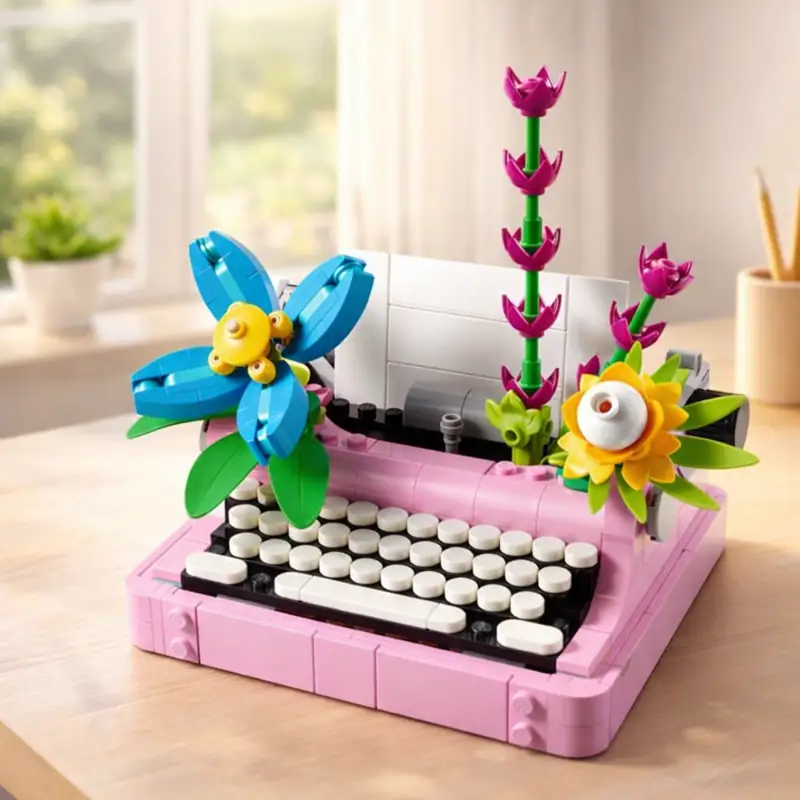
There are castle-shaped mugs, camera lens mugs, cat mugs, flower shaped mug, mugs that resemble vintage typewriters, and mugs designed to look like tiny cauldrons straight out of a fantasy novel. None of these designs make coffee taste better. They don’t keep drinks hotter. They don’t improve the engineering of the mug itself.
And yet people love them. The reason is surprisingly simple: they’re not really buying a better mug. They’re buying a better experience of using the mug.
The Difference Between Function and Meaning
A plain ceramic mug disappears into the background of daily life. A castle-shaped mug quietly tells the world that its owner loves fantasy stories. A camera lens mug hints at an interest in photography. A cat mug communicates something about personality before a single word has been spoken.
The object becomes more than an object. It becomes a tiny form of self-expression. This is where many discussions about novelty products go wrong. Critics often evaluate them according to standards they were never intended to satisfy. They ask whether a fish-shaped slipper is more practical than a normal slipper, or whether a duck-shaped lamp performs better than an ordinary lamp.
Usually, the answer is no. But practicality was never the primary goal.
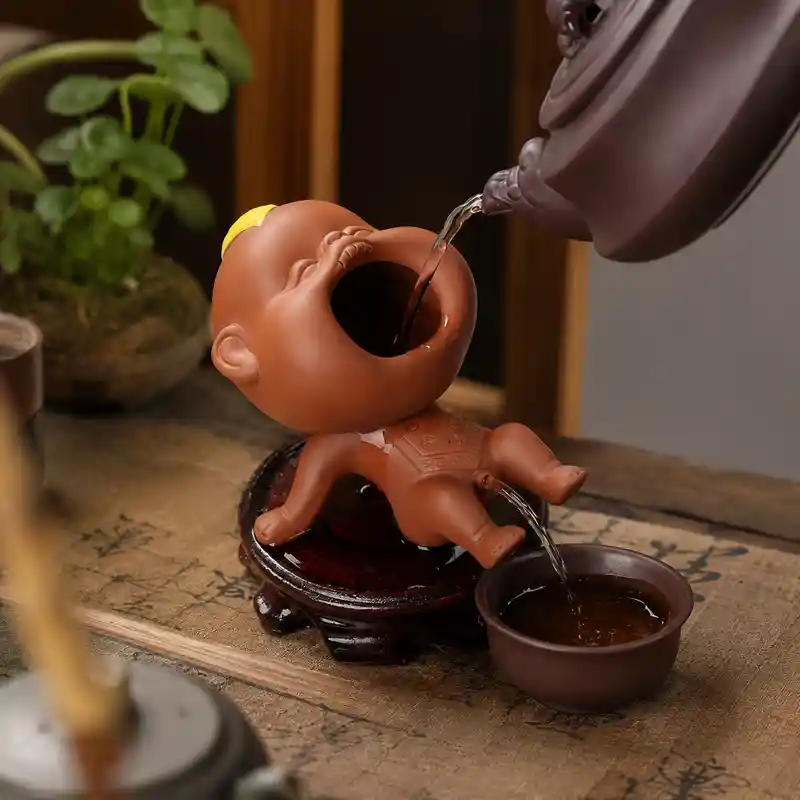
A duck-shaped lamp isn’t competing with other lamps. It’s competing with boredom. A mushroom lamp isn’t trying to maximize efficiency. It’s trying to make a room feel slightly more magical. The value comes from the reaction it creates rather than the function it performs. Once you begin looking at novelty products through that lens, they start to make a lot more sense. Many of them are best understood as conversation starters disguised as household objects.
Imagine a friend visiting your home for the first time. They probably won’t remember your standard desk lamp. They probably won’t remember your perfectly functional coffee mug. Those objects blend into the environment because they’re familiar. But a giant mushroom lamp sitting in the corner of the room? That gets noticed. A pair of fish slippers by the front door? That gets noticed too.
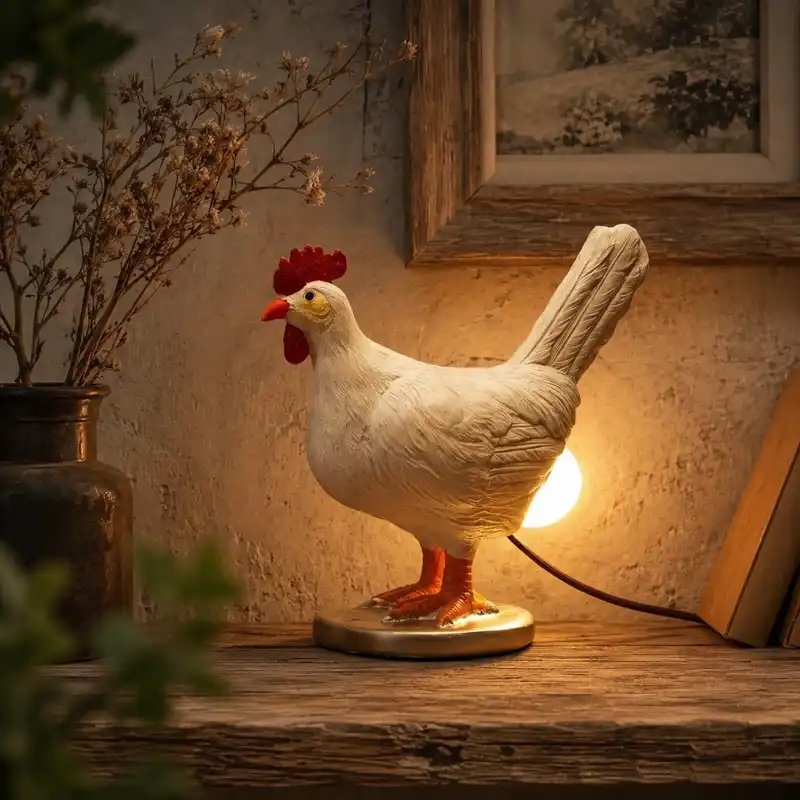
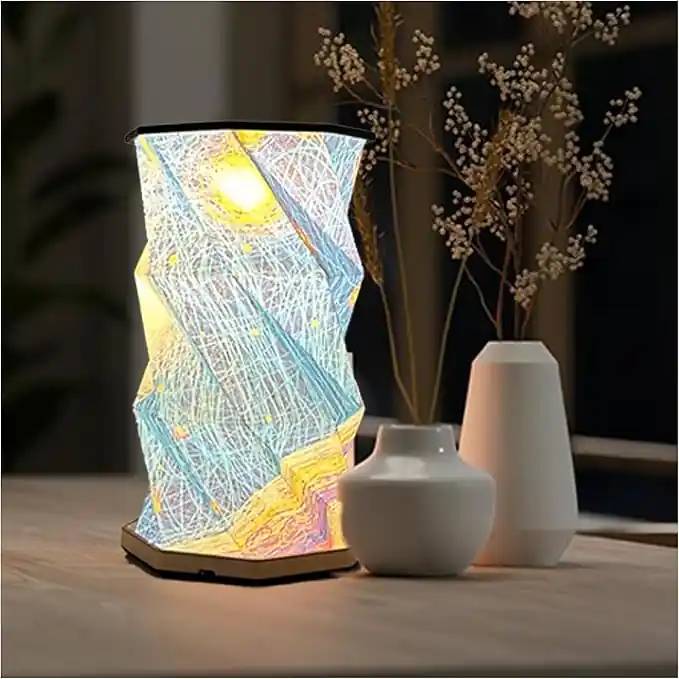
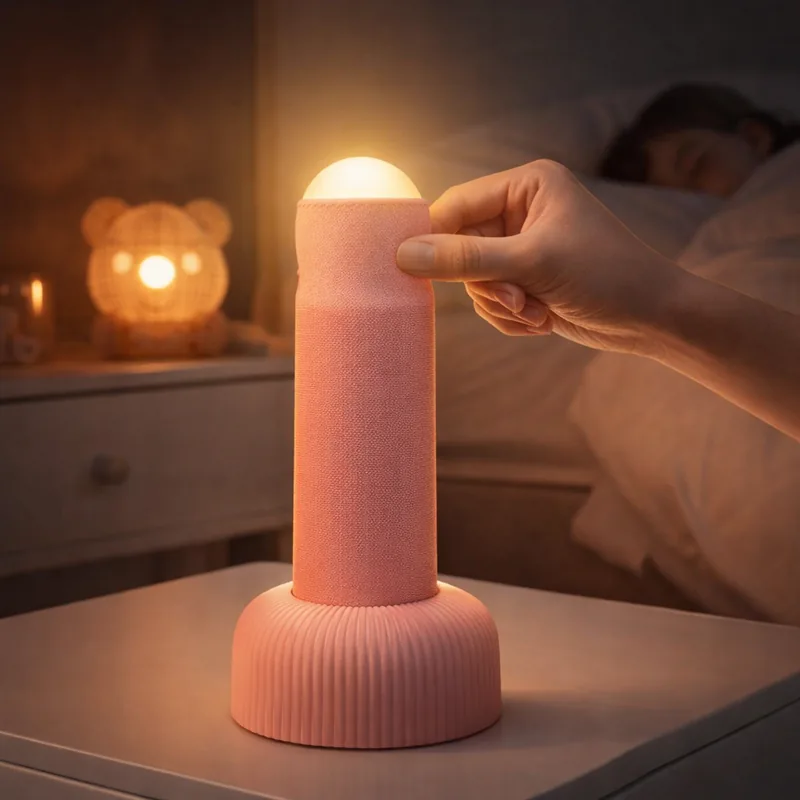

The same is true for countless unusual objects that continue to thrive online. Their success often has less to do with utility and more to do with memorability.
People remember things that surprise them.
They remember things that make them laugh.
They remember things they’ve never seen before, And memory itself may be one of the hidden products being sold, This becomes especially obvious when we start thinking about gifts.
Memory May Be the Real Product
A practical gift can certainly be appreciated, but unusual gifts tend to create stories. Years later, someone may not remember who gave them a pair of socks. They might, however, remember the friend who gave them a banana-shaped telephone that became the most ridiculous object in their apartment. The item itself is only part of the value, The story attached to it becomes equally important. In some cases, the story becomes the entire reason the product exists.
That’s one reason novelty products continue to thrive generation after generation. They offer something that many ordinary products struggle to provide: an experience worth talking about.
And in a world overflowing with products, information, and endless choices, being memorable may be one of the most valuable qualities a product can possess. The question, then, is why humans seem so naturally drawn toward things that are unusual in the first place. To answer that, we need to look beyond shopping and into something much older—human psychology itself.
Why Our Brains Love Weird Things
At this point, novelty products start to look a little less mysterious. People aren’t necessarily buying them because they’re useful. They’re buying them because they create experiences, spark conversations, and leave lasting memories. But that still leaves an important question unanswered. Why do unusual things capture our attention so easily in the first place? The answer has less to do with shopping and more to do with how the human brain evolved. For most of human history, paying attention to unusual things was a survival skill.
Imagine walking through a forest thousands of years ago. Most of the environment would be familiar and predictable. Trees looked like trees. Rocks looked like rocks. The sounds of the forest blended into the background. But if something suddenly appeared that didn’t belong—a strange movement in the bushes, an unfamiliar animal, an unexpected color—your attention would immediately shift toward it.
Ignoring unusual things could be dangerous, Paying attention to them could be life-saving. Over time, human brains became remarkably efficient at filtering out the ordinary and focusing on the unexpected. That mechanism still exists today. The difference is that most of us are no longer scanning forests for predators, We’re scrolling through screens instead.
The Science of Novelty
Every day, people are exposed to an overwhelming amount of information. Advertisements, Videos, News headlines, Social media posts, Photos, Messages. The brain simply can’t process everything equally, so it constantly makes decisions about what deserves attention and what can be safely ignored. Predictable things are often filtered out, Unexpected things are not.
That’s why a standard desk lamp rarely attracts attention online, A duck-shaped lamp has a much better chance, A normal pair of slippers may go unnoticed, Fish slippers tend to stop people mid-scroll. Even a completely ridiculous object such as a yodeling pickle has an advantage over more practical products because it immediately creates a question in the viewer’s mind.
“What exactly am I looking at?”
Curiosity is one of the most powerful attention-grabbing forces humans possess. When we encounter something unusual, the brain naturally wants to resolve the uncertainty. It wants to understand what it’s seeing and why it exists. Novelty products exploit that instinct exceptionally well, They create a small information gap, And people are naturally motivated to close it.
Why Social Media Loves Strange Products
This may help explain why novelty products seem more visible today than ever before. The internet didn’t invent strange products, It simply gave them a much larger audience.
A century ago, bizarre inventions were mostly confined to gift shops, tourist attractions, and mail-order catalogs. People might encounter them occasionally, but their reach was limited. Today, a single image can travel across the world in a matter of hours. A mushroom lamp on a desk in one country can suddenly appear on millions of screens in another. A banana-shaped telephone can generate curiosity long before anyone knows what it actually does. The products themselves haven’t changed much, The distribution system has.

Social media platforms reward attention, And weird products are exceptionally good at earning attention. Every piece of content faces the same challenge: Convincing someone to stop scrolling. Most fail. Unexpected things have a better chance. That’s why unusual products often spread far beyond their original audience. People don’t share them because they’re practical. They share them because they’re surprising. In many cases, the act of sharing becomes part of the product’s value.
Someone discovers something strange, They send it to a friend,The friend laughs. The cycle continues, The product becomes a conversation long before it becomes a purchase.
Weirdness Has Become a Competitive Advantage
This creates a fascinating situation for modern product designers. For decades, businesses focused primarily on improving performance, efficiency, and functionality. Those qualities still matter, of course. But in an online world where thousands of products compete for attention every day, being useful is sometimes no longer enough.
Being memorable matters too.
A product that performs its function reasonably well while also making people smile may attract more attention than a technically superior product that lacks personality. That reality can be frustrating for engineers who care deeply about optimization. But it reflects something fundamentally human, People are not machines making perfectly rational decisions.
They’re emotional, social creatures navigating a world filled with stories, symbols, and shared experiences. And that’s exactly why strange products continue to thrive. The products may change from one generation to the next, but the underlying psychology remains remarkably consistent.
Humans have always been drawn toward things that are unexpected, The internet simply gave that tendency a bigger stage, And that brings us back to the Pet Rock. Because once you understand the role of curiosity, attention, and novelty, the success of a rock in a cardboard box starts to seem a lot less absurd than it first appears.
The Pet Rock Was Never Really About the Rock
Seen from this perspective, the success of the Pet Rock begins to look much less like a bizarre historical accident and much more like an unusually clear demonstration of how people assign value to objects.
The stone itself was almost irrelevant. There was nothing remarkable about it, nothing technologically innovative, and certainly nothing that justified its popularity on purely practical grounds. If utility had been the deciding factor, the Pet Rock would have failed immediately. Yet millions of people bought one anyway because they were never purchasing the rock itself. What they were really buying was participation in a shared joke, a conversation piece they could place on a desk or give to a friend, and a story that instantly made sense the moment it was explained.
That distinction matters because it continues to shape consumer behavior today. Many products that appear irrational at first glance become much easier to understand once we stop evaluating them solely according to their function. A pair of fish slippers is not competing with high-performance footwear. A banana-shaped telephone is not trying to outperform modern smartphones. Their appeal comes from an entirely different source. They succeed because they create a reaction, and reactions are often more valuable than specifications.
For decades, business literature has focused heavily on efficiency, optimization, and problem-solving. Those factors are undeniably important, particularly when consumers are making decisions about necessities. Nobody wants a refrigerator that is less reliable simply because it has more personality. But once basic needs have been met, people begin looking for something more difficult to measure. They start searching for products that feel distinctive, entertaining, surprising, or somehow reflective of who they are.
In that sense, novelty products occupy a category that traditional economic models often struggle to explain. Their purpose is not merely functional. They operate within a space shaped by curiosity, emotion, identity, humor, and social interaction. These forms of value may be harder to quantify than durability or performance, but they are no less real.
Why Strange Products Aren’t Going Away
Every few years, someone predicts that consumers will eventually become more rational and that markets for seemingly unnecessary products will disappear. History suggests otherwise.
The specific products change, but the underlying demand remains remarkably consistent. One generation embraces the Pet Rock. Another becomes fascinated by novelty desk toys, unusual lamps, or bizarre gift ideas that spread across social media. Some trends last only a few months before fading away, while others unexpectedly achieve cultural longevity. Yet the cycle itself never seems to stop.
Part of the reason is that novelty serves a genuine psychological purpose. Human beings are naturally drawn toward experiences that interrupt routine. Daily life is filled with repetition, and objects that introduce an element of surprise can make familiar environments feel slightly more interesting. The effect may be small, but it is often enough.
A strange object on a shelf can become a conversation starter. An unusual gift can become a shared memory. A product that initially appears ridiculous may eventually acquire sentimental value because of the story attached to it. Over time, the object becomes less important than the experiences surrounding it.
This is one reason novelty products often perform particularly well as gifts. When people shop for themselves, practicality tends to play a larger role. When shopping for someone else, however, the goal frequently shifts. Instead of solving a problem, people want to create a moment. They want to surprise, amuse, or delight someone in a way that will be remembered long after the occasion has passed.
Viewed through that lens, many so-called useless products begin to look surprisingly useful after all.
A Marketplace Built on Curiosity
The internet has amplified this phenomenon in ways that Gary Dahl could hardly have imagined in 1975.
When the Pet Rock was launched, its success depended largely on traditional media coverage and word of mouth. Today, a single photograph, video, or social media post can introduce an unusual product to millions of people within hours. As a result, curiosity itself has become a powerful commercial force.
Products no longer compete only on quality or price. They compete for attention in an environment where countless alternatives are available at any given moment. In such a crowded marketplace, being memorable can be just as important as being practical.
This helps explain why so many successful products seem designed to provoke an immediate response. They make people pause while scrolling, send a link to a friend, or ask a simple question: “Where did you find that?”
In many cases, that moment of curiosity becomes the beginning of the entire customer journey.

Half a century after the Pet Rock became an unlikely bestseller, the lesson it revealed remains surprisingly relevant. People do not always purchase products because they solve problems. Sometimes they buy them because they tell stories, express personality, create memories, or simply make everyday life feel a little less predictable.
That does not mean practicality has become unimportant. Most purchasing decisions are still guided by function, price, and necessity. Yet human beings have never been purely rational consumers, and the enduring popularity of novelty products serves as a reminder of that fact.
The world’s strangest products continue to sell because they satisfy something that spreadsheets and specification sheets often overlook. They appeal to curiosity. They reward attention. They create moments of amusement in otherwise ordinary situations.
Perhaps that is why the Pet Rock remains such a fascinating example all these years later. On the surface, it was simply a rock in a box. Underneath, it revealed something much more interesting about the people buying it.
The products may change. The impulse behind them rarely does.
As long as people continue to enjoy discovering things that are unexpected, clever, and delightfully difficult to explain, there will always be room for the world’s strangest products.