There is a peculiar contradiction in the way we set up our desks. We spend hours choosing keyboards, arranging monitors, managing cables, and buying accessories designed to make us more efficient, yet somehow end up sitting in front of workspaces that feel completely devoid of personality. Everything has a purpose, everything promises to improve productivity, and almost nothing gives us a reason to smile.
Perhaps that’s why weird desk gadgets have such an enduring appeal. A miniature dumpster full of stationery, a wooden stick designed for flipping tricks, or a tiny UFO that abducts paper clips doesn’t seem like an obvious workplace essential. Some of these objects do solve small, everyday problems, while others offer little beyond a moment of amusement or an unexpected visual detail. Their appeal lies somewhere between usefulness, curiosity, and our willingness to make ordinary surroundings a little less ordinary.
Of course, unusual design doesn’t automatically make something worth buying. A funny object can become clutter just as easily as a conventional one, and a clever gimmick may lose its charm after a few days. The interesting question isn’t simply whether these gadgets are strange, but whether there’s enough behind the strangeness to make you want to keep them around.
These eight desk gadgets approach that question in very different ways, from genuinely practical accessories disguised as jokes to elaborate decorations that make almost no attempt to justify their existence.
1. Desk Dumpster — A Tiny Disaster That Keeps Your Pens Organized
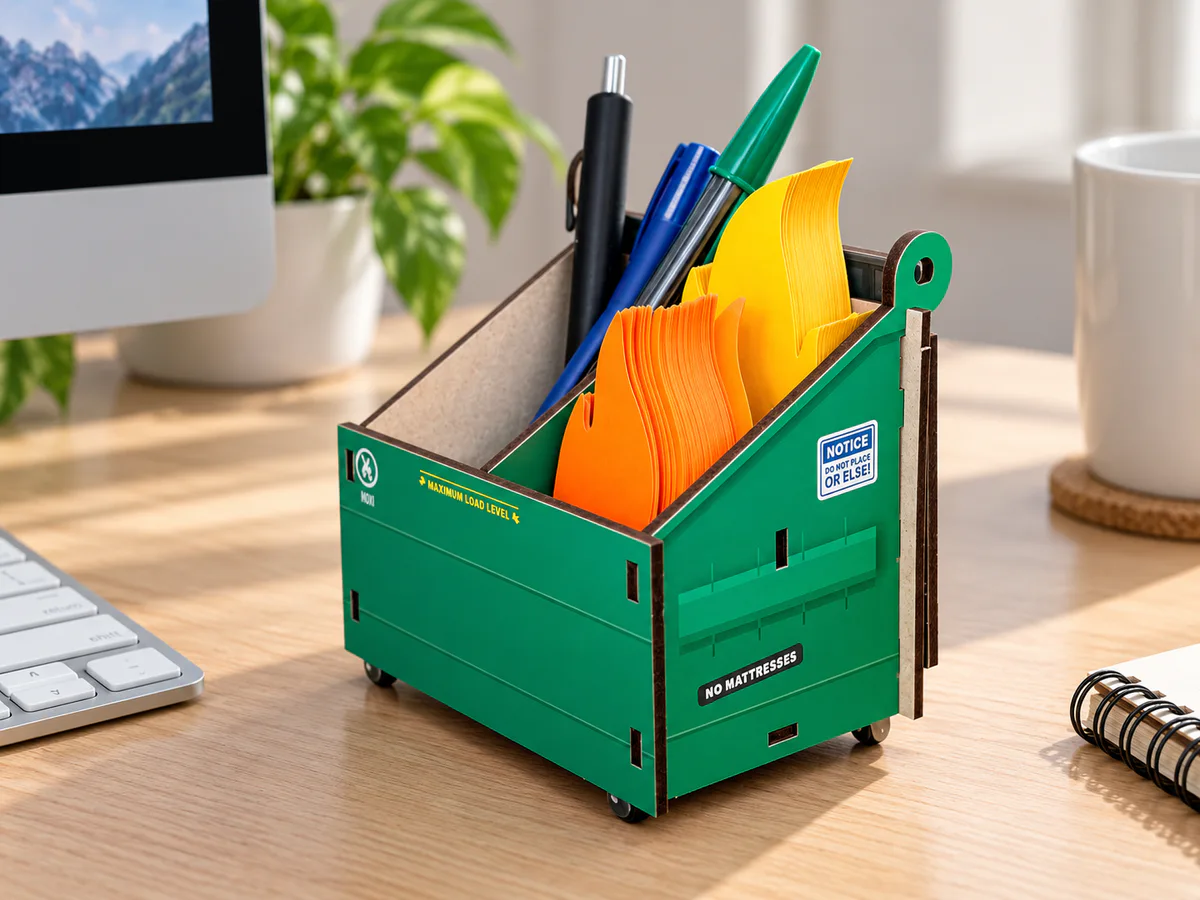
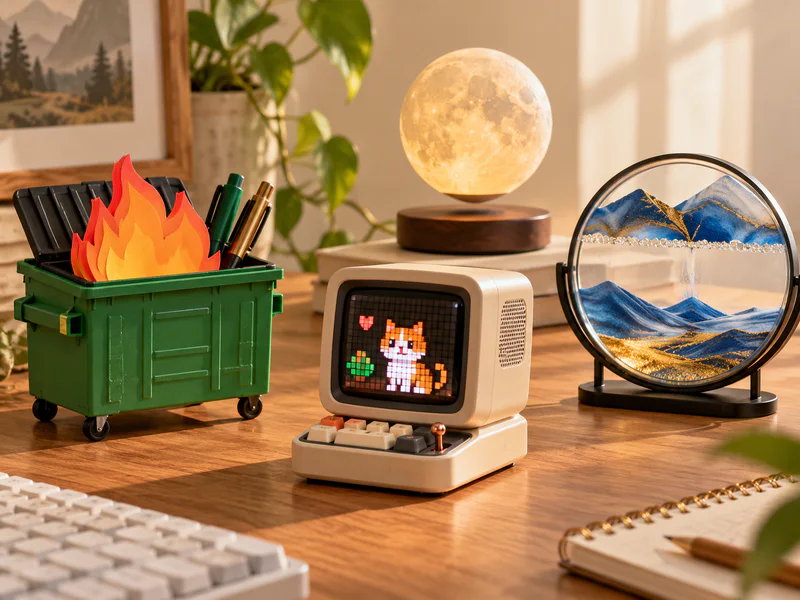
Somewhere along the way, someone looked at a miniature dumpster and decided it belonged on an office desk. The result is the Genuine Fred Desk Dumpster, a stationery organizer that takes the familiar expression “dumpster fire” rather more literally than anyone probably intended. It resembles a small green commercial waste container, complete with flame-shaped note cards rising from the top, as though your unfinished tasks have finally become a visible emergency.
Underneath the joke, the design is surprisingly straightforward. Three compartments provide space for pens, pencils, and other small stationery, while the included flame-shaped note cards turn ordinary reminders into part of the visual gag. There’s nothing particularly innovative about its organizing ability, but that isn’t really the point. The same pens could sit in a plain cup, and a conventional sticky-note pad would work just as well. What you’re paying for is the pleasure of turning an unremarkable office task into something mildly ridiculous.
The construction also deserves realistic expectations. This is a relatively small, assembled stationery holder, not a miniature version of an actual heavy-duty plastic dumpster. It won’t accommodate every object scattered across a busy workstation, and anyone looking for a substantial desk organizer can find more practical alternatives.
Still, the Desk Dumpster has one advantage over most conventional office supplies: its joke is immediately understandable, even to someone seeing it for the first time. That makes it an especially fitting accessory for workplaces where the occasional small disaster is simply part of the daily routine.
Best for: Office humor, quirky stationery collections, and coworkers who appreciate a joke about the working day.
[Check Desk Dumpster on Amazon]
2. Moving Sand Art — A Landscape That Changes Without a Screen
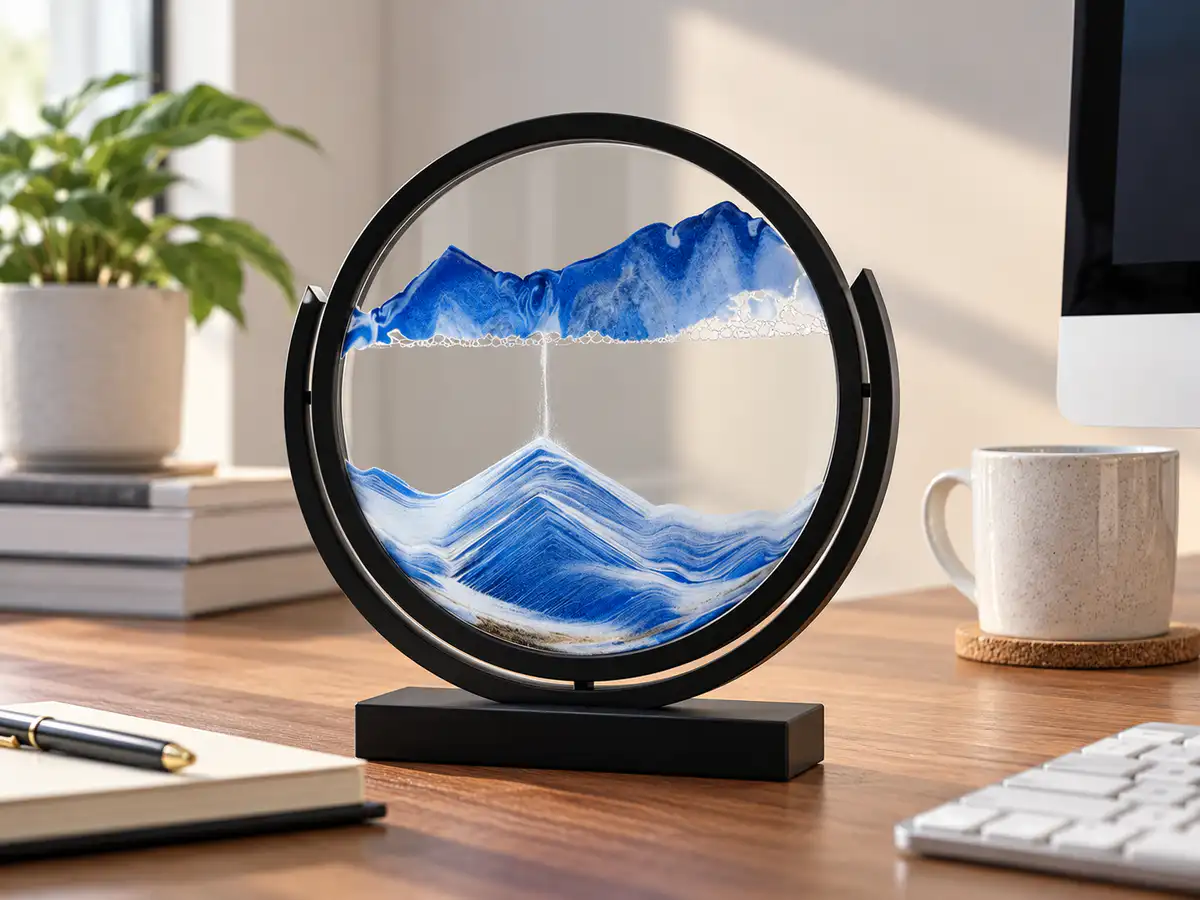
A desk covered in digital devices doesn’t necessarily need another object demanding your attention, especially one with flashing lights, constant notifications, or an accompanying app. Moving sand art offers almost the opposite experience. Inside a transparent frame, colored sand slowly drifts through liquid and air pockets, settling into patterns that resemble mountains, dunes, or distant landscapes. Turning the frame over resets the process, producing another arrangement that may look entirely different from the previous one.
What makes the effect interesting is its unpredictability. Unlike a looping animation, the falling grains respond to gravity and the distribution of air inside the frame, producing formations that are never quite identical. The movement is slow enough to observe without requiring much interaction, and the finished image remains until someone decides to turn the frame again. It’s a simple combination of materials and physical forces, presented in a way that feels unexpectedly artistic.
Whether this counts as a useful desk gadget depends heavily on what you expect from your accessories. It won’t organize anything, help you finish a project, or make difficult work easier. Watching it may provide a pleasant visual break, although someone easily distracted could just as reasonably find themselves staring at sand instead of completing a task. Calling it a productivity tool would be generous.
There’s also a significant difference between well-made and poorly made examples. Flow speed, frame quality, air distribution, and the possibility of trapped sand can all affect the experience, so it’s worth examining the specific product rather than buying purely from an attractive photograph.
For people who enjoy kinetic art, though, moving sand has an appealing quality: it offers a little visual variety without needing another screen.
Best for: Quiet desk decoration, kinetic-art enthusiasts, and people who enjoy watching small patterns emerge.
[Explore Moving Sand Art on Amazon]
3. MOKURU — A Piece of Wood That Somehow Became Entertainment
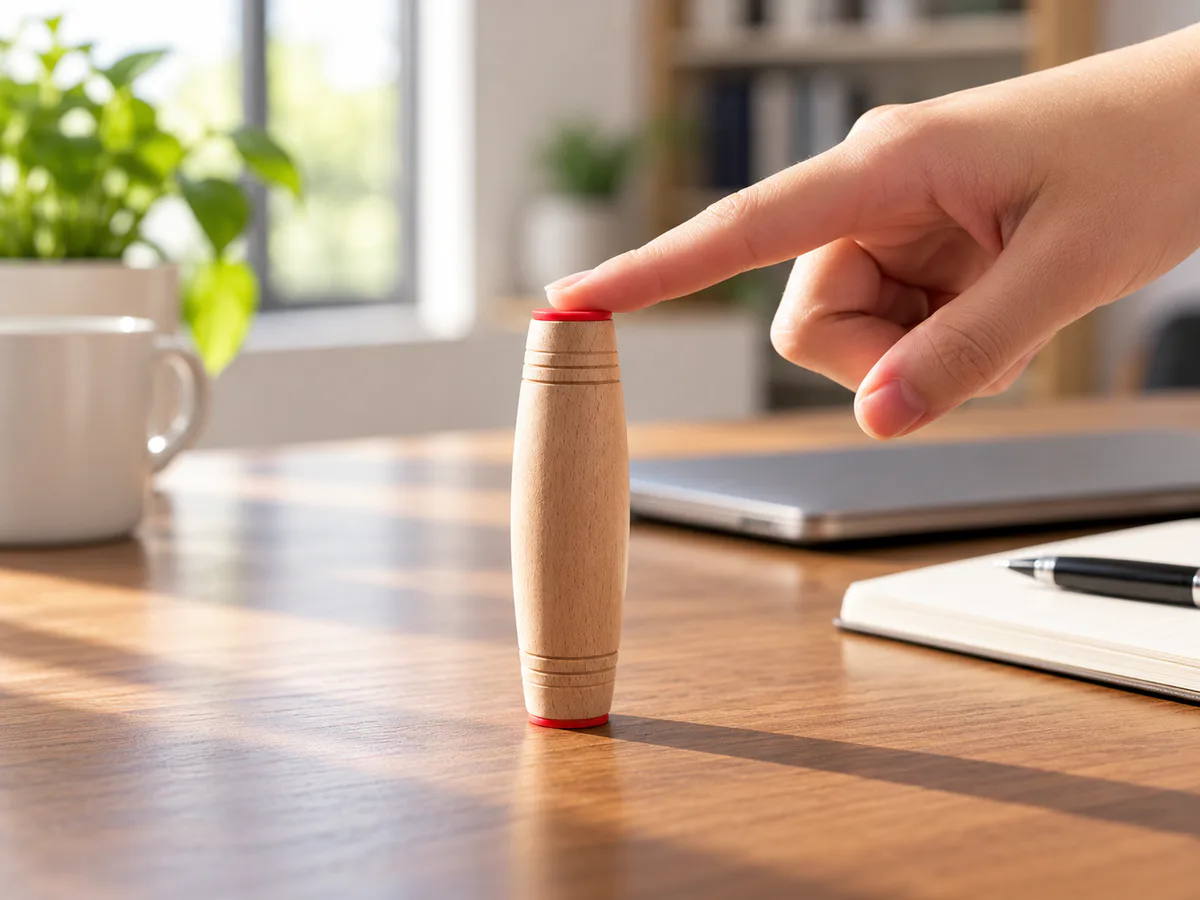
MOKURU looks like an unusually shaped wooden furniture component, which makes its identity as a desk toy rather difficult to explain at first glance. Its elongated body, rounded profile, and rubberized ends don’t immediately suggest any particular game or activity. Yet the idea behind it is simple enough: tip the object, flip it across a flat surface, and try to control or catch its movement. What initially looks like an unremarkable piece of wood becomes a small challenge involving timing, balance, and hand coordination.
There’s an interesting contrast between the simplicity of the object and the variety of movements people can attempt with it. A basic flip may be easy to understand, but getting the object to behave consistently takes practice, and more complicated tricks introduce additional opportunities for failure. Unlike a toy that entertains through lights, sounds, or programmed animations, MOKURU relies entirely on the user’s willingness to experiment. Its appeal comes from gradually learning to perform a movement that looked effortless in someone else’s hands.
That doesn’t mean it has any special ability to improve concentration or relieve stress. It’s a toy, and a fairly single-purpose one at that. If you don’t enjoy repetitive physical challenges, there’s very little else it can offer. It also requires some clear space, making it less convenient on a crowded desk covered in coffee mugs, paperwork, or fragile accessories.
Yet its simplicity is also what makes it distinctive. MOKURU illustrates how an ordinary material can become interesting through the way people interact with it, rather than through increasingly complicated technology. It’s also a good example of why we sometimes become attached to objects with almost no conventional utility, a theme explored in How Weird Objects Quietly Become Part of Our Lives.
Best for: Tactile desk toys, small coordination challenges, and people who enjoy learning tricks for no particular reason.
[Browse Flipping Desk Toys on Amazon]
4. Divoom Ditoo Pro — A Miniature Computer With Better Things to Do
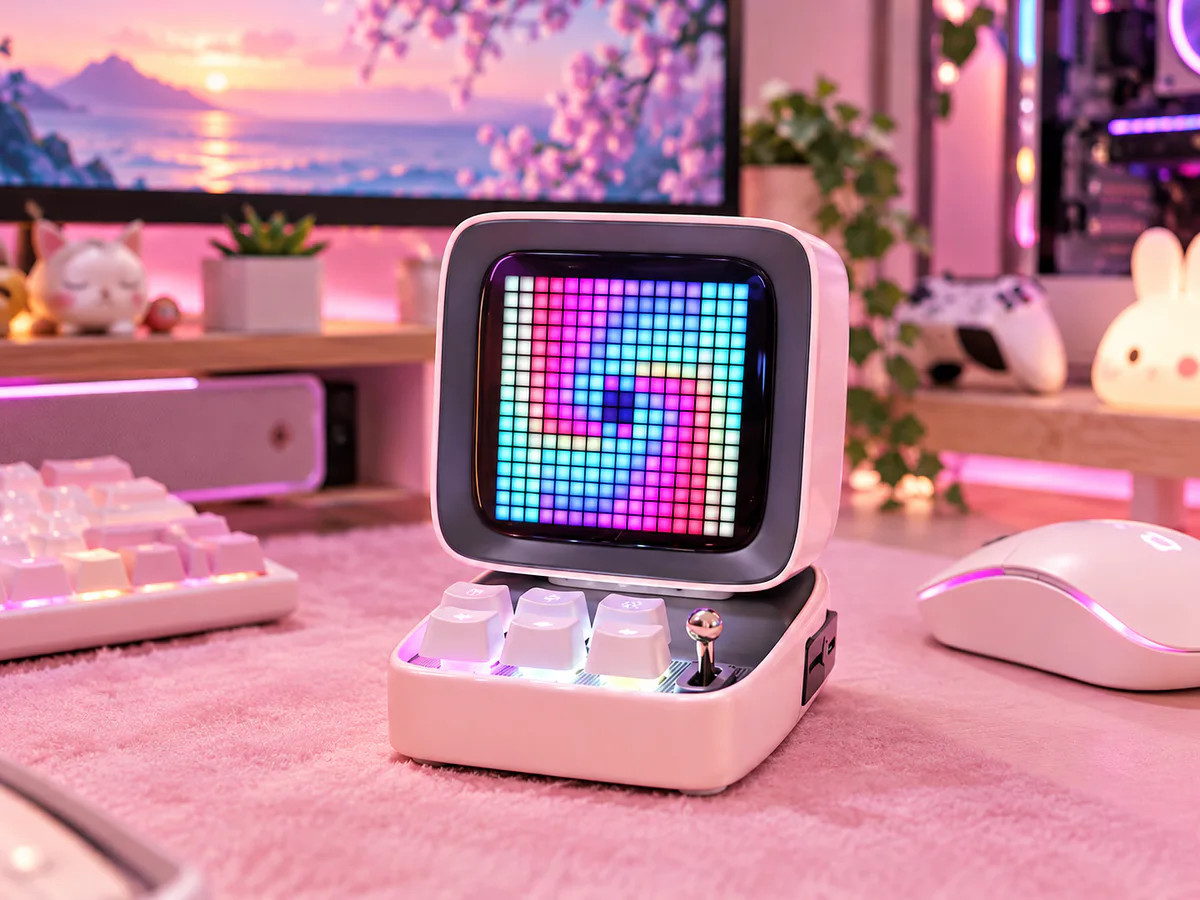
The Divoom Ditoo Pro looks like a tiny desktop computer from an alternate version of the 1980s, complete with a miniature keyboard, a colorful display, and the sort of playful proportions that make it difficult to take seriously. Despite its appearance, it isn’t intended for spreadsheets, emails, or other conventional computer tasks. It’s a Bluetooth speaker with a pixel-art screen, designed to combine music, customizable animations, and several small everyday functions inside a remarkably charming package.
The display is central to its personality. It can show animated pixel artwork, clocks, and other visual content, while the accompanying app provides access to additional designs and customization features. The device also includes functions such as alarms and timers, making it more versatile than a purely decorative miniature computer. For someone who already keeps a speaker beside their monitor, Ditoo Pro offers a way to combine music playback and desktop decoration without requiring several separate objects.
Still, its miniature computer design is the main reason someone would choose it over an ordinary Bluetooth speaker. If sound quality per dollar is the only consideration, a conventional speaker is likely to be a more sensible purchase. The display also introduces a potential distraction, particularly when animated designs are running throughout the workday, and the experience depends partly on how much someone enjoys customizing the screen.
What the Ditoo Pro does unusually well is make familiar technology feel playful again. Its retro styling recalls an era when computers seemed mysterious and full of possibility, rather than merely being devices through which work arrives. Whether that nostalgia is worth the additional expense depends on the buyer, but the product has enough genuine functions to avoid being dismissed as an expensive desk ornament.
Best for: Pixel-art enthusiasts, retro-computing fans, and people who want a speaker with more personality.
[Browse Divoom Ditoo Pro on Amazon]
5. Levitating Moon Lamp — An Expensive Way to Defy an Ordinary Desk
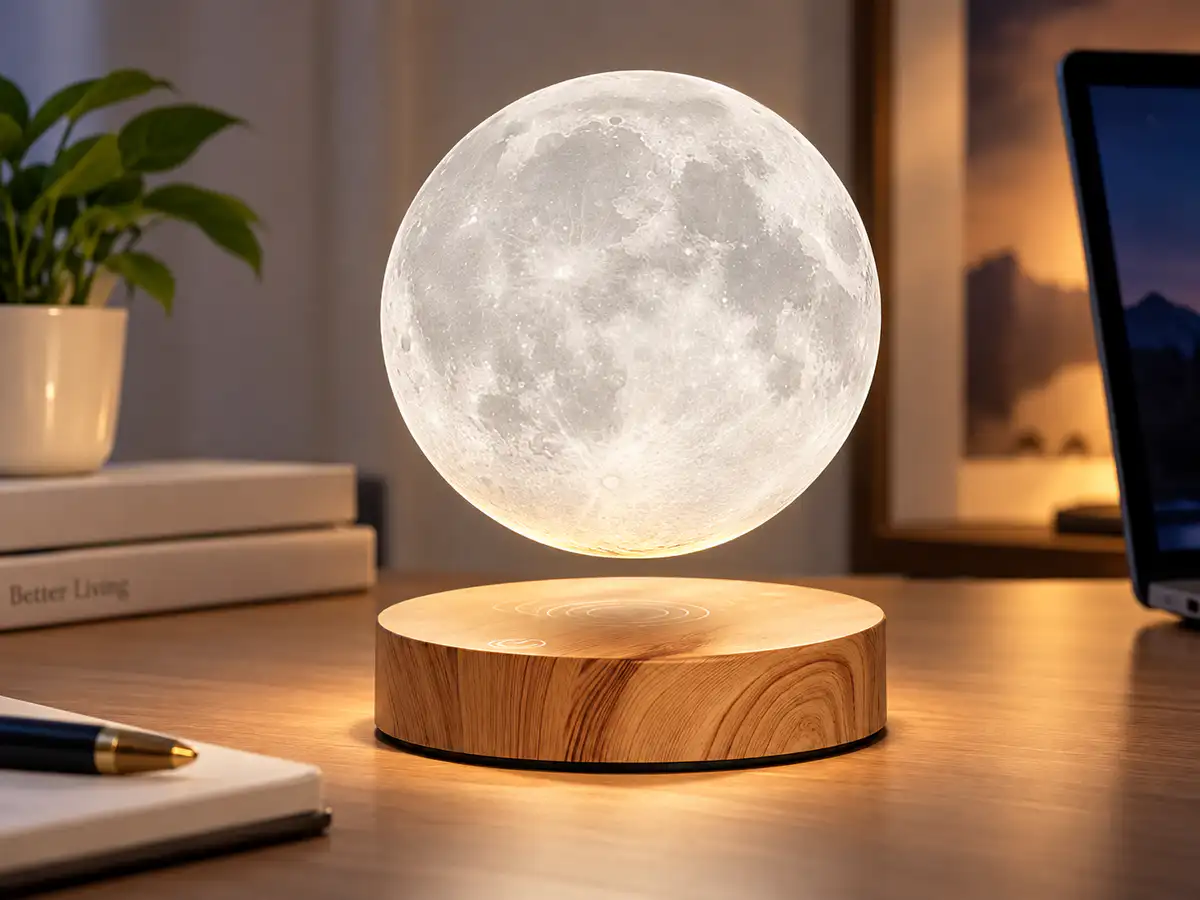
A realistic miniature Moon would already make a distinctive desk decoration, but apparently that wasn’t ambitious enough for whoever decided it should float. Magnetic levitation moon lamps suspend a textured, illuminated sphere above a powered base, creating the impression of a tiny celestial body hovering in midair. Depending on the model, the sphere may also rotate, adding another layer of movement to an object that’s already doing something ordinary desk lamps generally don’t attempt.
The visual effect is undeniably appealing, particularly in a dim room where the illuminated surface becomes more noticeable. It combines the familiarity of a moon-shaped lamp with the unexpected experience of seeing an object suspended without an obvious support. Unlike a standard decorative globe, the floating design provides a small demonstration of magnetic technology that visitors are likely to notice immediately.
However, this is where a sensible buying decision requires some restraint. A levitating moon lamp is primarily a decorative object, not an efficient substitute for proper task lighting. Its illumination is generally intended for atmosphere rather than serious reading or detailed work, while the magnetic suspension system can require patience when positioning the sphere correctly. Many models also need a continuous power connection, and the quality of the levitation mechanism matters considerably.
The novelty comes at a price, both financially and practically. A regular moon lamp can provide a similar glow without the complexity of magnetic suspension, while an ordinary desk lamp is considerably better at illuminating a workspace. If all you need is light, buying a floating Moon makes very little sense.
But if the intention is to own something unusual, visually memorable, and mildly absurd, the levitation is precisely what you’re paying for. It’s a luxury decoration that happens to emit light, and it makes a much more convincing purchase when understood that way.
Best for: Space enthusiasts, unusual lighting setups, and people who value visual impact over strict practicality.
[Check Levitating Moon Lamps on Amazon]
6. Deadpool Cable Guy — A Superhero Reduced to Holding Your Phone
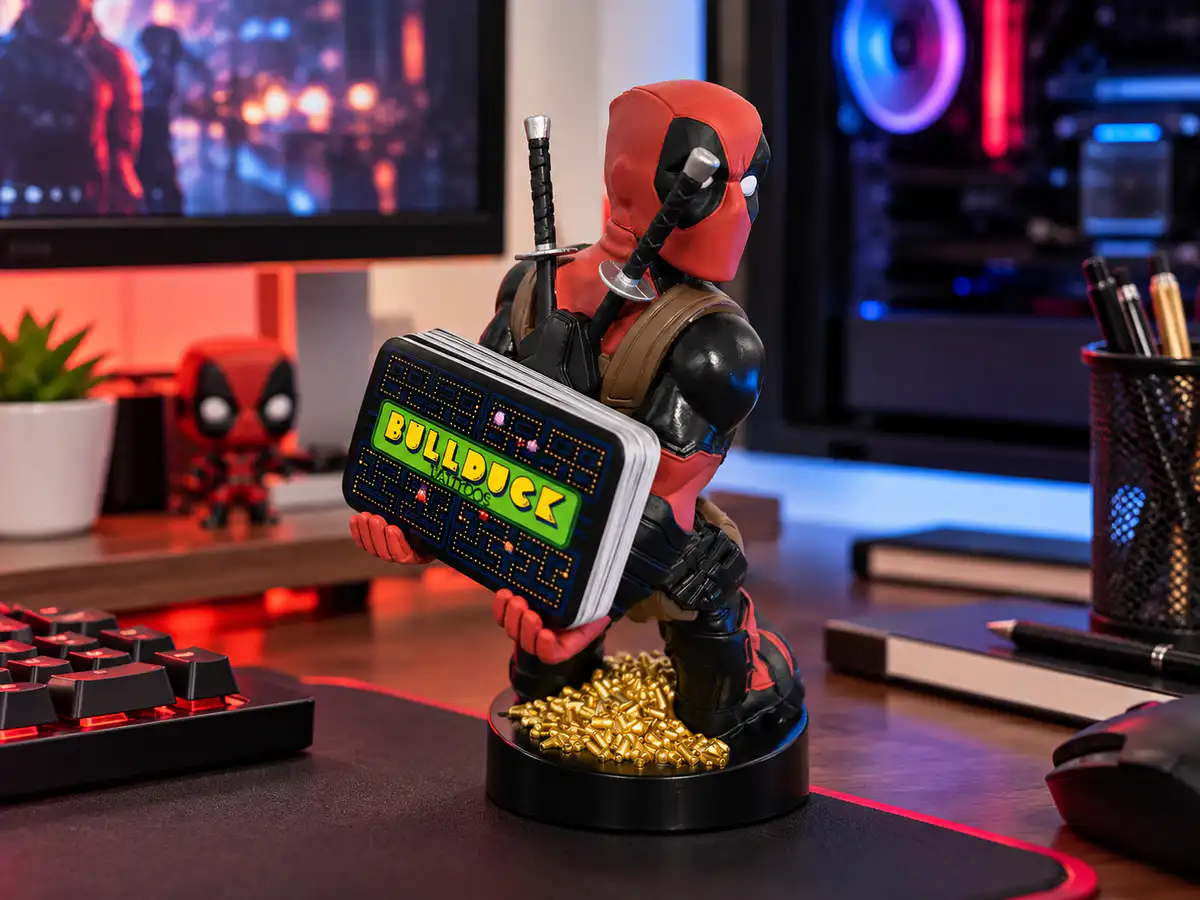
Of all the possible responsibilities someone could assign to Deadpool, keeping a smartphone upright seems surprisingly mundane. Nevertheless, that’s the premise of the Deadpool Cable Guys figures from EXG Pro, which transform the Marvel character into a device holder. Rather than presenting a conventional plastic stand with a simple groove or adjustable arm, the design uses a character figure whose outstretched hands support a compatible phone or controller.
As a practical concept, the product isn’t especially complicated. A dedicated holder can keep a phone visible on the desk, prevent it from disappearing beneath paperwork, and make it easier to glance at notifications without picking it up constantly. Those benefits are available from countless ordinary stands, many of which cost less and occupy considerably less space. What makes the Deadpool version different is the deliberate decision to turn an everyday accessory into a recognizable pop-culture collectible.
That combination will appeal to some people far more than others. A fan of the character might enjoy having a miniature superhero involved in the daily routine, while someone trying to maintain a restrained, minimalist workstation could reasonably find the figure excessive. Full-size Cable Guys figures also take up more room than compact phone holders, and buyers should check the specific version and device compatibility before assuming that every model supports the same equipment.
The main limitation, then, isn’t that the product fails to perform a useful task. It’s that the useful task is extremely easy to accomplish without buying a licensed character figure. The additional value comes almost entirely from enjoying Deadpool’s presence on the desk, which is a perfectly reasonable preference as long as nobody confuses it with superior engineering.
Best for: Deadpool collectors, Marvel fans, and people who prefer character-themed accessories to minimalist electronics.
[Check Deadpool Cable Guy on Amazon]
7. Dreams CABLE BITE — Small Animals With a Surprisingly Sensible Job
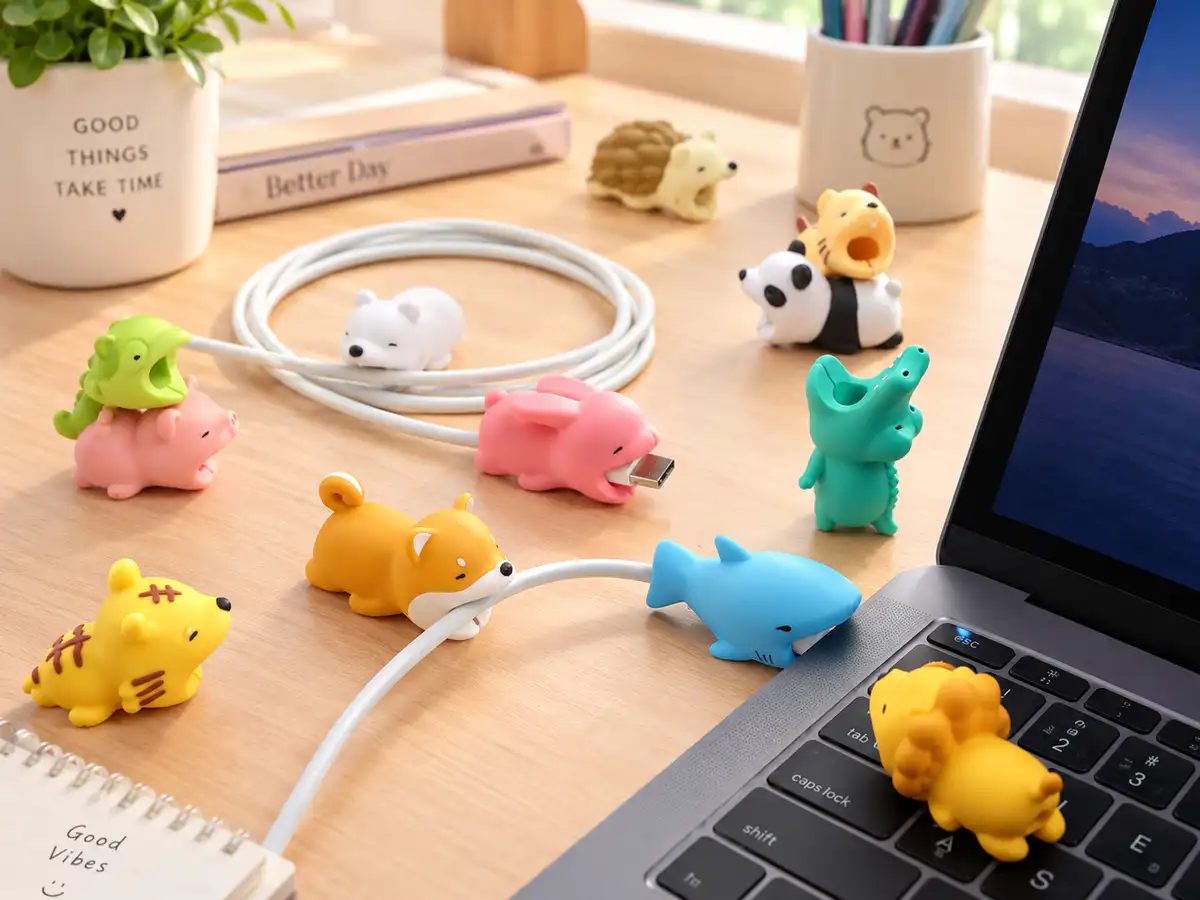
Charging cables are so common that most people barely notice them until one starts bending awkwardly near its connector. The Dreams CABLE BITE accessories approach this ordinary problem with an unusually charming idea: attach a tiny animal figure to the end of a compatible cable so that it appears to be biting the connector. What might otherwise look like an unremarkable protective accessory becomes a miniature creature hanging onto a piece of everyday technology.
The appeal is immediate, but there’s also a modest functional purpose. Positioned around the cable near a vulnerable bending point, the figure is intended to provide additional support while adding a recognizable decorative element. The USB-C versions are particularly relevant to contemporary devices, although compatibility depends on the connector and cable dimensions. Choosing the correct version is important, especially because similar-looking products and different connector formats can easily be confused.
It’s worth keeping expectations realistic. A small plastic accessory cannot repair an already damaged cable, guarantee protection against every type of strain, or compensate for poor cable construction. It may even be inconvenient if the figure interferes with a tightly fitted case or a particular charging arrangement. Anyone primarily interested in cable longevity could choose a well-constructed cable with suitable strain relief instead.
But CABLE BITE succeeds because it makes a small accessory visually enjoyable without dramatically changing how the cable is used. It occupies little desk space, doesn’t require charging, and has a practical role that is easy to understand. Like some of the stranger kitchen gadgets we’ve explored in our collection of weird but useful kitchen tools, the idea is more appealing because the underlying problem is ordinary and familiar.
Best for: Playful charging accessories, inexpensive desk gifts, and people who appreciate small animal designs.
[Explore Animal Cable Protectors on Amazon]
8. Filing Saucer — The Most Elaborate Way to Store Paper Clips
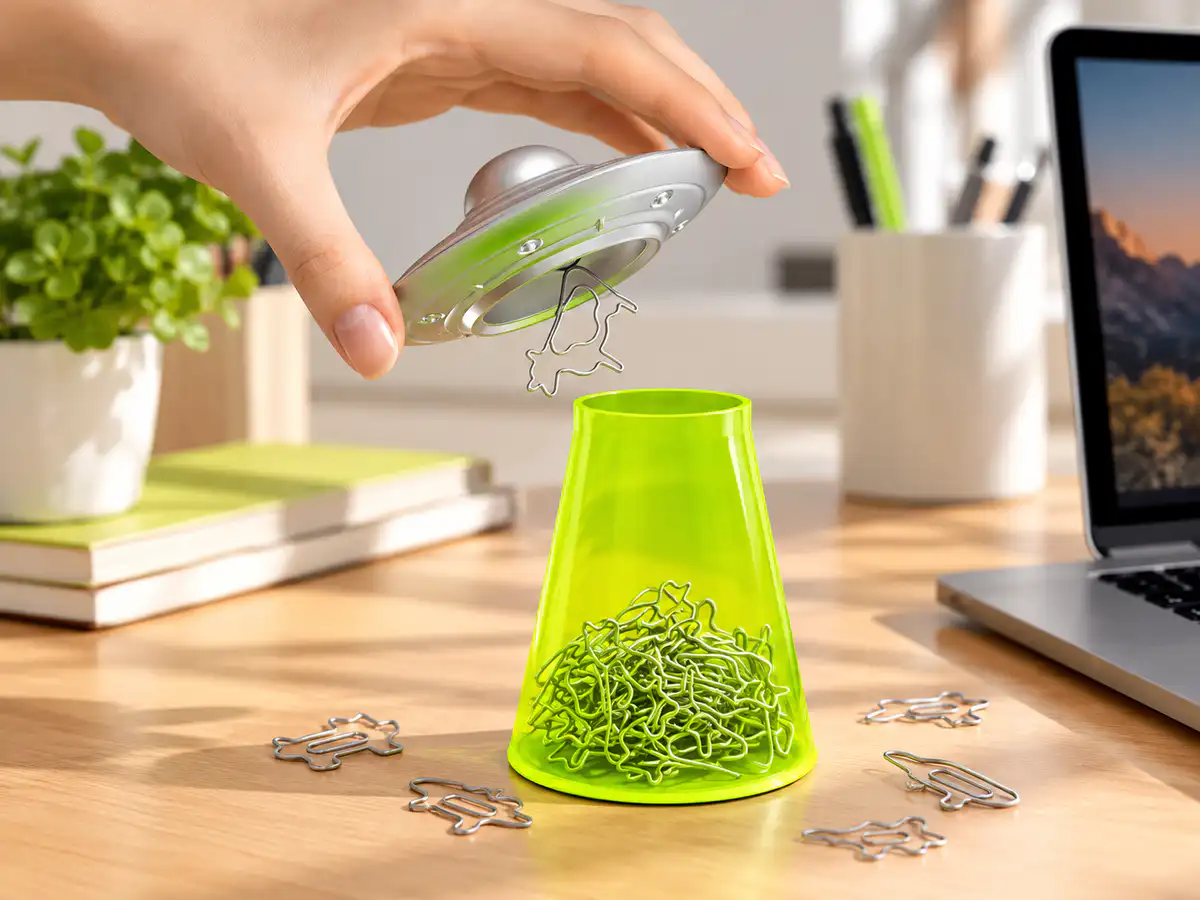
A paper clip holder is about as straightforward as office equipment gets. Its job is simply to keep a collection of small metal objects together, preferably somewhere they won’t vanish beneath a keyboard. Genuine Fred’s Filing Saucer takes that modest requirement and transforms it into a miniature science-fiction incident, complete with a flying saucer, magnetic attraction, and tiny cow-shaped paper clips waiting to be abducted.
The mechanism is part of the joke. A magnet incorporated into the saucer attracts the metal clips, allowing them to hang beneath the UFO as though they were being lifted by an invisible tractor beam. Rather than hiding paper clips inside a conventional container, the design turns them into the central feature of the object. It’s an unusually satisfying example of functional humor because the magnetic element contributes to both the appearance and the basic organizing purpose.
Of course, the whole arrangement is hilariously unnecessary. Ordinary paper clips don’t require an elaborate alien-abduction scenario, and many people working almost entirely with digital documents barely use them anymore. The themed clips may also be less convenient than standard stationery for someone who handles large volumes of paperwork. If the goal is simply to organize office supplies as efficiently as possible, a basic magnetic dispenser will do the job without involving extraterrestrial livestock.
What makes Filing Saucer more interesting than a random UFO figurine is that its absurdity is integrated into an actual function. The unusual appearance doesn’t merely disguise an ordinary product; it changes how the product presents and stores the objects it’s designed to hold.
That’s a useful distinction when judging weird desk gadgets. Some add decoration to an existing tool, some turn a practical activity into a joke, and a few manage to make the joke part of the mechanism itself. Filing Saucer belongs firmly in that last category, which makes it an appropriately strange conclusion to this collection.
Best for: Science-fiction enthusiasts, quirky stationery collectors, and office workers who still have a use for paper clips.
[Check Filing Saucer on Amazon]
Why Do We Give Weird Objects a Place on Our Desks?
There’s an interesting difference between the things we need at work and the things we choose to keep around us. A keyboard, monitor, or office chair generally earns its place by performing an obvious task, but the smaller objects scattered across a desk often serve a more personal purpose. They might reflect a favorite fictional character, a particular sense of humor, an interest in unusual technology, or simply a preference for objects that don’t look like everything else.
Weird desk gadgets occupy that space between practical equipment and personal expression. Desk Dumpster and Filing Saucer turn ordinary stationery into elaborate visual jokes, while Ditoo Pro and CABLE BITE combine familiar functions with playful design. MOKURU and moving sand art offer little conventional productivity value, but may still earn a place through the enjoyment of interacting with or observing them. A levitating moon lamp goes further, asking the owner to accept that visual spectacle is itself a legitimate reason to keep an object nearby.
None of this means every strange product deserves a permanent home on the desk. Novelty fades, and an accessory that initially seemed delightful can eventually become another object to dust, move, or store. There’s also a limit to how much decoration a workspace can accommodate before personality turns into clutter. The most satisfying unusual products tend to be those whose appeal survives beyond the first moment of surprise.
This fascination isn’t confined to office accessories. As we’ve explored in Why Do We Love Weird Things?, unusual objects can attract us for reasons that go beyond their practical features. On a desk, where many people spend a substantial part of their day, even a small expression of personality can feel surprisingly meaningful.
Final Thoughts: Strange Is Fine, As Long As It Earns Its Space
A weird desk gadget doesn’t need to transform your working life to be worth keeping, but it should offer something that lasts longer than the initial joke. That might be the convenience of having a phone holder within reach, the small pleasure of a changing sand landscape, or the familiar amusement of seeing a miniature dumpster fire whenever the workday becomes unnecessarily complicated.
The most important distinction isn’t between serious products and ridiculous ones. It’s between objects that continue to add something to your surroundings and objects that become forgotten clutter once their novelty disappears. A simple cup will hold pens just as effectively as Desk Dumpster, and an ordinary lamp will provide better task lighting than a floating Moon. Those comparisons don’t make the stranger products meaningless; they simply clarify what you’re actually buying.
Ultimately, the best desk accessories reflect how you want your workspace to feel, not just how efficiently you want it to function. Some people prefer clean surfaces and minimal distractions, while others enjoy surrounding themselves with objects that tell small stories. Neither approach is universally better, but the second certainly leaves more room for a UFO full of paper clips.
And if you’ve somehow managed to keep something even stranger beside your keyboard, we’d be curious to know what it is — and why it has survived every attempt to tidy your desk.